23 Jan PATAGONIA Part 2: Los Glaciares and Torres del Paine
In part 1 of this series on photography travel in Patagonia I focused on our two week drive through the northern and central parts of this vast and wild region (you can read the story by clicking here). At the end of that post we had just finished exploring the Northern Patagonian Icecap and it’s enormous glaciated peaks. We had planned a direct transit from there into the area of southern Patagonia that has become so famous in the world of landscape photography – the section of Los Galciares National Park close to El Chalten and the Torres del Paine National Park. But distances are on a continental scale here – driving out of Puerto Guadal in the early morning we faced into a 750km drive mostly on gravel roads. Ten hours Google Maps indicated for a journey through an area with almost no habitation. You can drive a good chunk of the way across western Europe or the US in ten hours!
That’s not to say the journey has no interest. For the first two hours we negotiated a rough and sometimes precipitous road sandwiched between the turquoise waters of Lago General Carrera and the rugged peaks of Patagonia National Park. In less scenically blessed countries this would have been a national highlight, but we didn’t even stop. The landscape became increasingly arid as we moved further into the rain shadow of the Andes and crossed into Argentina. From the border we turned south on Ruta 40 through a seemingly endless arid steppe. Vast horizons and skies dominated as the hours passed – the road often dead straight for many kilometres and the now distant profile of the Andes marching along with us in the west. Given a 4WD vehicle, camping equipment and a couple of weeks to explore there is no doubt you could find some incredible photographic opportunities here. There are badlands, salt lakes and cinder cones that would not be out of place in Iceland.
Without the luxury of time or the right vehicle we pressed on south, and even on the main highway our RV was taking a pounding from the rough gravel and potholes. As evening fell we suffered a series of punctures using up both spares. Just after dark we punctured a third time and crawled to the side of the road mercifully within sight of the lights of Tres Lagos, but still well short of our planned destination of El Chalten. Sometime after midnight we found a local mechanic who rustled up a pre-loved tyre to get us into town. The only restaurant in town stayed open to feed and water us and we crawled into bed in the early hours exhausted but glad not to be stuck on the roadside somewhere in the great empty plains.
The next day we limped onwards to El Chalten with no spare tyre, but thankfully on smooth asphalt. This little town has sprung up in the Las Vueltas valley in the shadow of Monte Fitzroy, one of the world’s most iconic and photogenic mountains. It is a town built around tourism but still retains a flavour of frontier charm. It reminds me of Chamonix – everyone is here for the mountains: to photograph them, hike among them or even to climb them. I was interested to see how the place had changed since I had last been here in 2005. It is undeniably busier than it was back then, especially on the trails, and the town is bigger – but the experience was very familiar – fun and welcoming. The restaurants and bars have expanded and become expensive, especially by Argentinian standards.
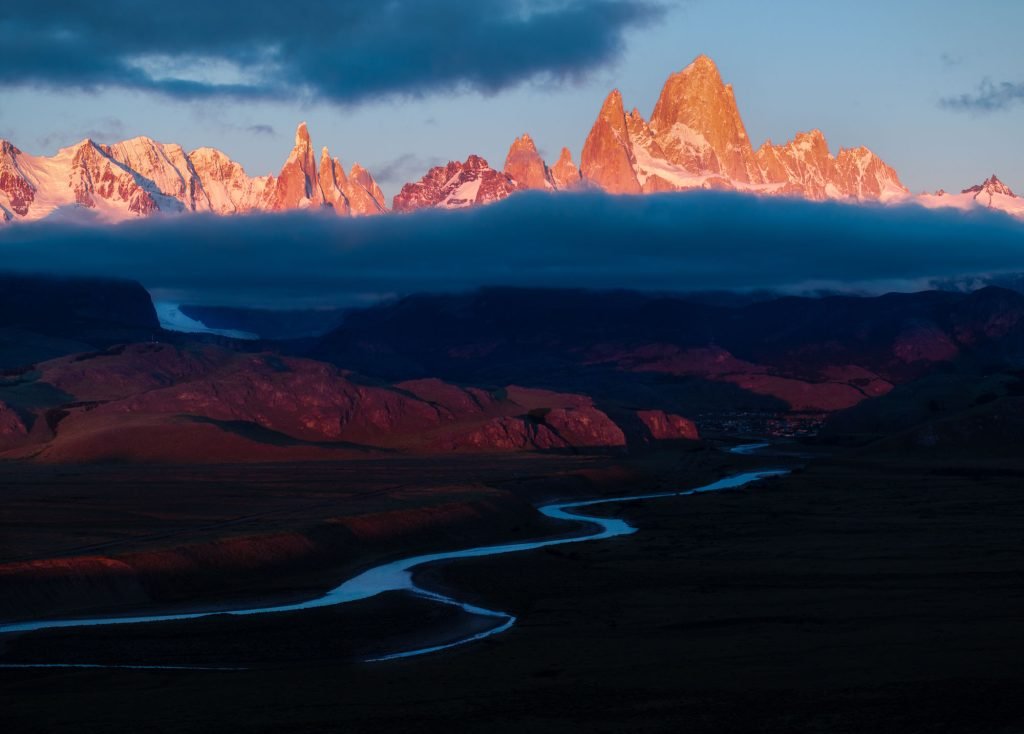
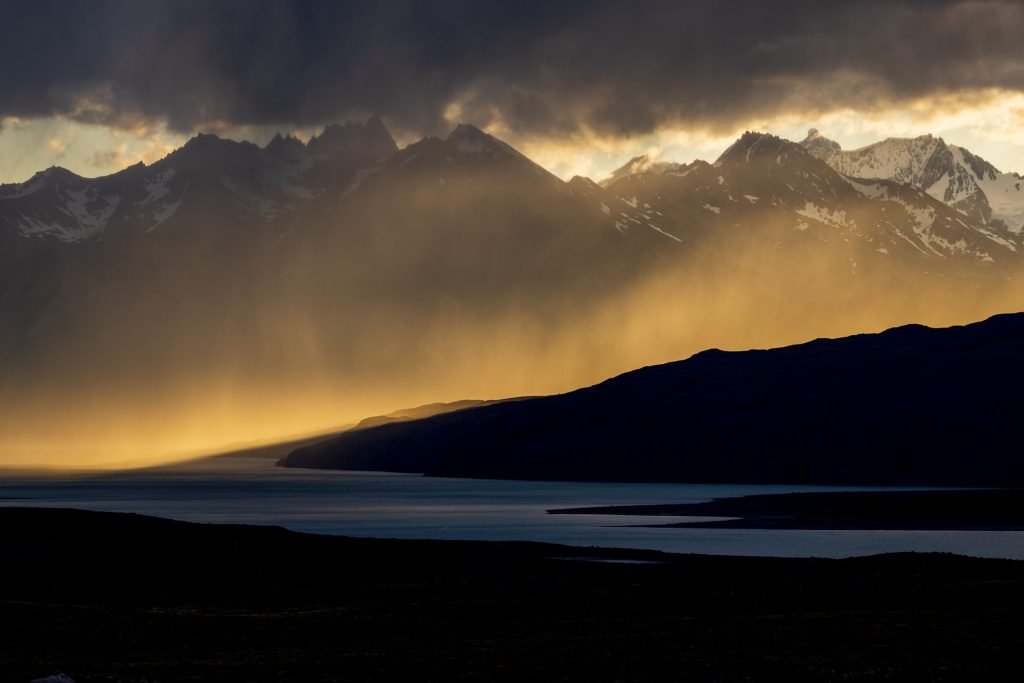
The approach to town is simply stunning. To the south are the vast glacial meltwaters of Lago Viedma, while straight ahead the view is dominated by one of the greatest mountain panoramas on the planet – a series of saw-tooth spires and jagged summits including the infamous Cerro Torre and Fitzroy itself. In fact the area just outside of town close to the road is a super place to shoot. There are leading-line views along the river and prefect opportunities to frame vignettes of the summits with a telephoto. I enjoyed a beautiful sunrise here with the low cloud breaking just in time to shoot the red glow on the summits. I also was doubly lucky to shoot some amazing evening light here as rain showers swept over Lago Viedma and for a frantic 30 minutes I seemed to be trying to shoot in three directions at once. This was one of those shoots were the light was so good it became difficult to slow down and consider the process – everything was done on instinct. The shoot finished with lenses, filters and lens caps in total disarray and as if a bomb had gone off in my camera bag. In other words, a great shoot.
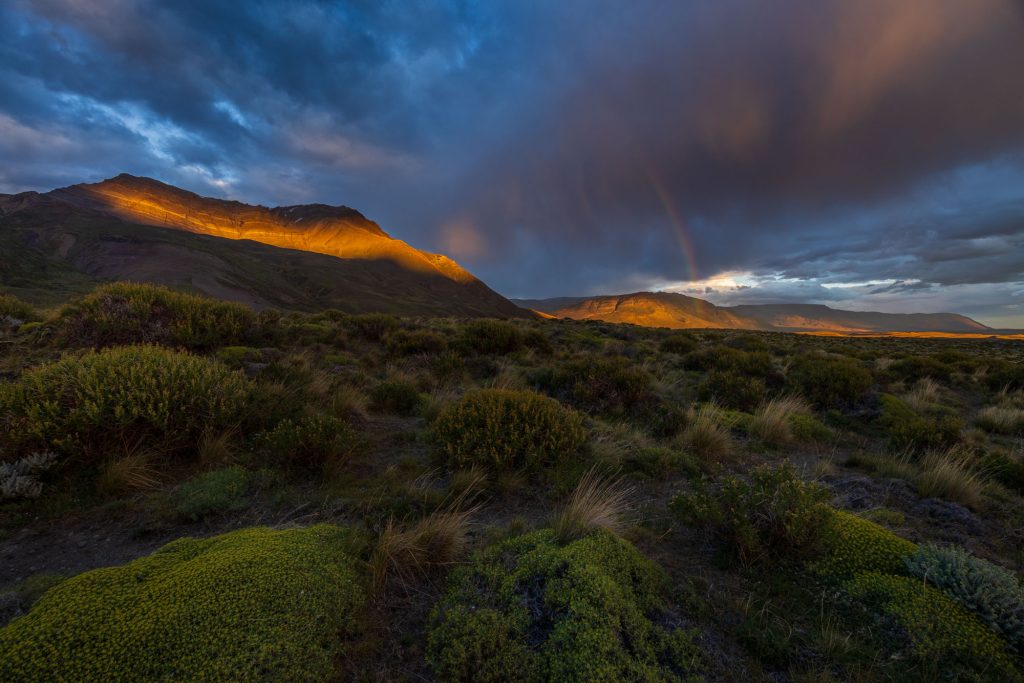
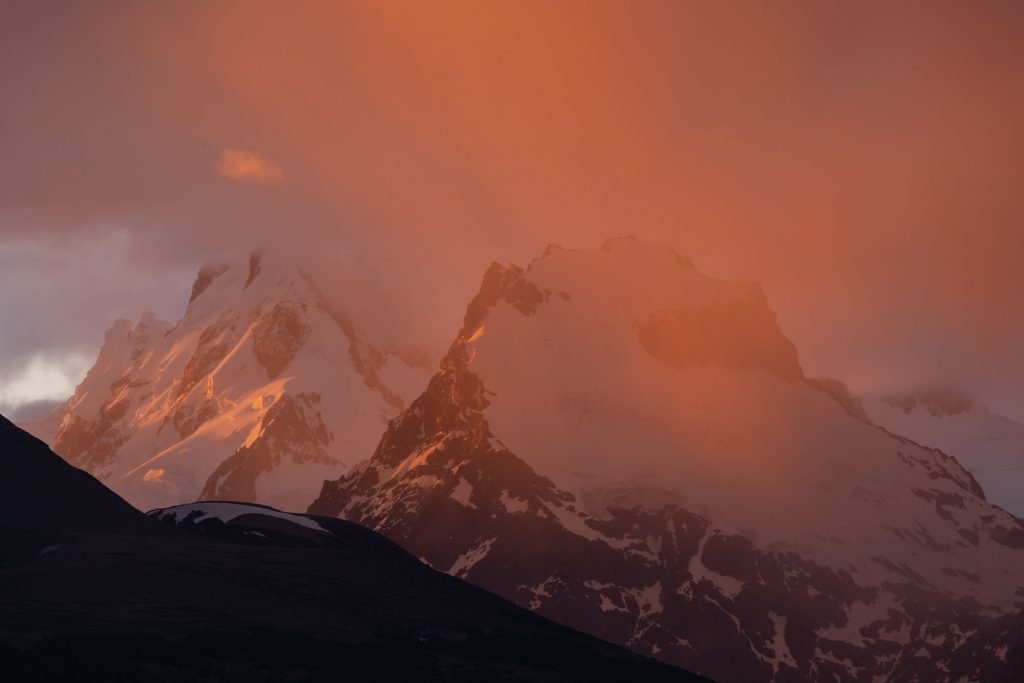
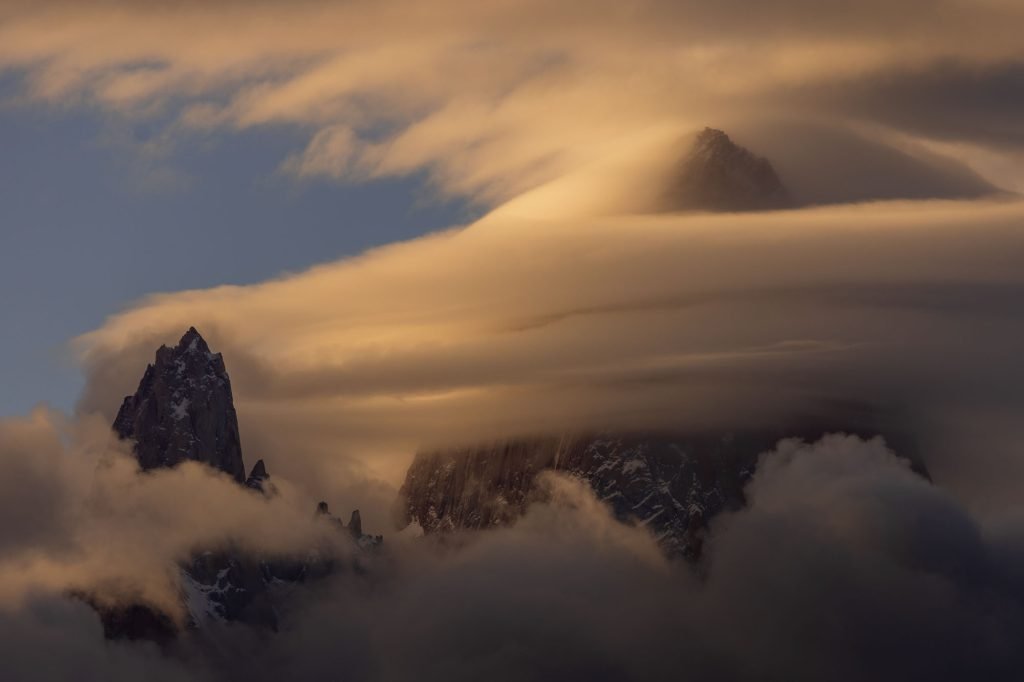
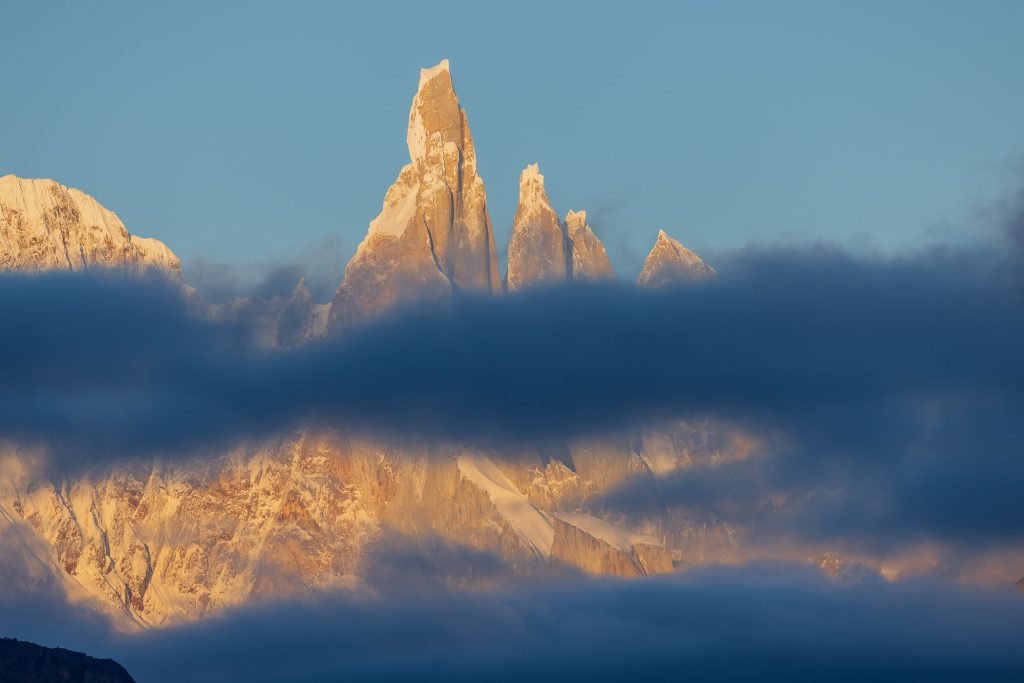
We had planned on four days in El Chalten – a narrow enough window in which to get good light. I felt as though I’d already bought a minor winning lottery ticket for the first sunrise and sunset. The next day saw a band of rain and sleet come through, but after that some fine weather was forecast. The others were planning a long day hike to Laguna de los Tres and Laguna Torre. And while they are both amazing spots for photography, we wouldn’t be there at the best times for light. So I opted to do my own thing, a lightweight overnight trip up to Camp Poincenot. I aimed to explore some of the side valleys and higher slopes for some different perspectives on Monte Fitzroy.
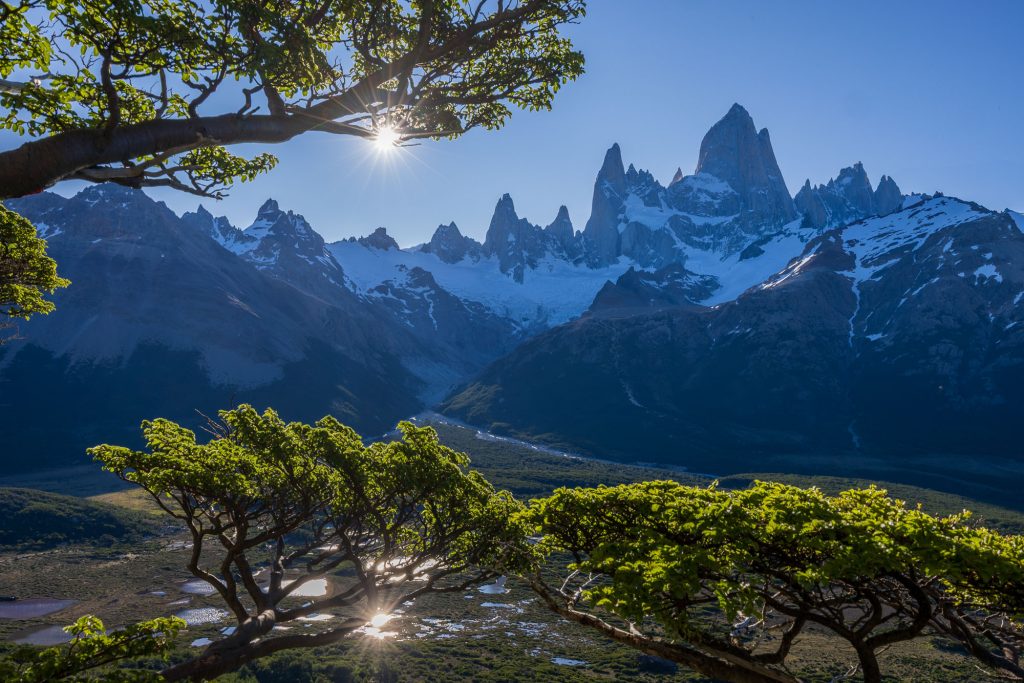
As it turned out the fine weather was just too fine for landscape photography, bland and uniformly blue skies which are not conducive to interesting images. I worked hard though to try to make something from the situation. After hiking up to the camp in the early afternoon with a pack as light as I could make it, I set up my bivouac in the trees and headed out again with my camera and some water and food for the rest of the day. I made several excursions climbing through the tangled brush and forest, eventually finding a narrow ramp of lenga trees between two bands of cliffs through which I could try to frame the mountains. The warm conditions had left me hot and thirsty and rationing my water, probably a first for me in Patagonia. Having shot what I could, I returned to camp, via the many small pools that dot the clear areas close to camp. With the light winds these were reflecting beautifully and they became my goal for the sunrise light I was hoping for. The forecast was for an approaching frontal system over the mountains, but cloudless conditions in the east.
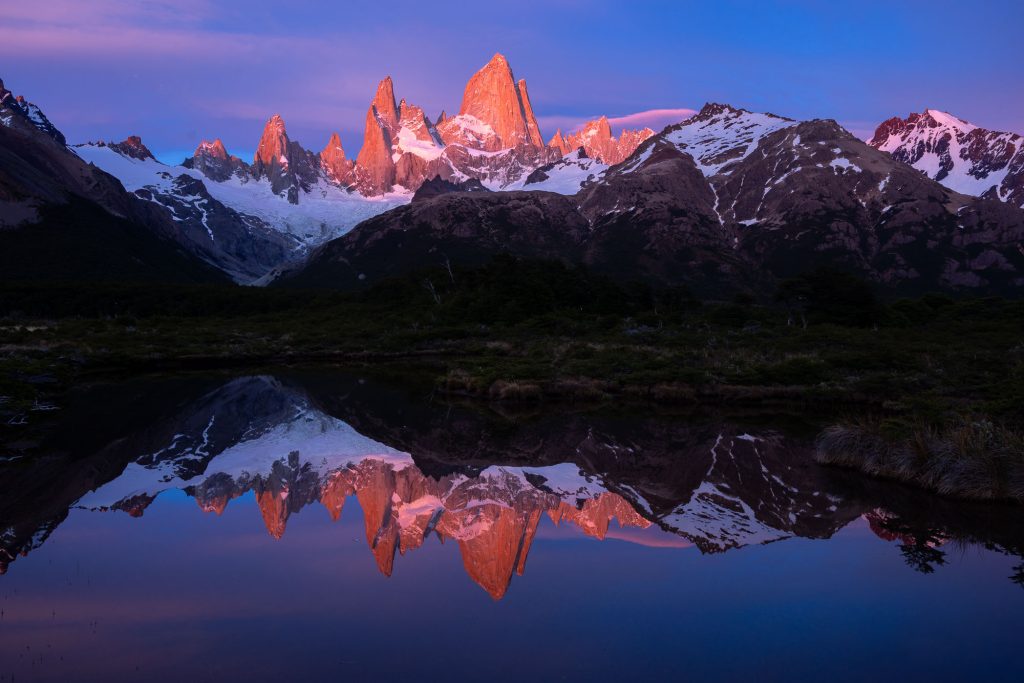
Patagonia is a notoriously windy place, but the deep valleys are sometimes very sheltered, and in the brief lulls between weather systems you can often get still conditions. The following morning the air was cold and calm with, as forecast, the classic Patagonian sunrise setup – approaching cloud above the mountains and clear sky across the plains in the east. I found a nice pool and waited for the sun to hit the summits – the early red light lasted about ten minutes before fading. Then, just as I was packing up, it flared again beautifully and I took the image on the cover of this post. With that the approaching cloud moved fully into the east and the light was gone. I packed up properly and hiked back down to El Chalten for a well-earned breakfast, fully satisfied with the images I had managed in such a short time here.
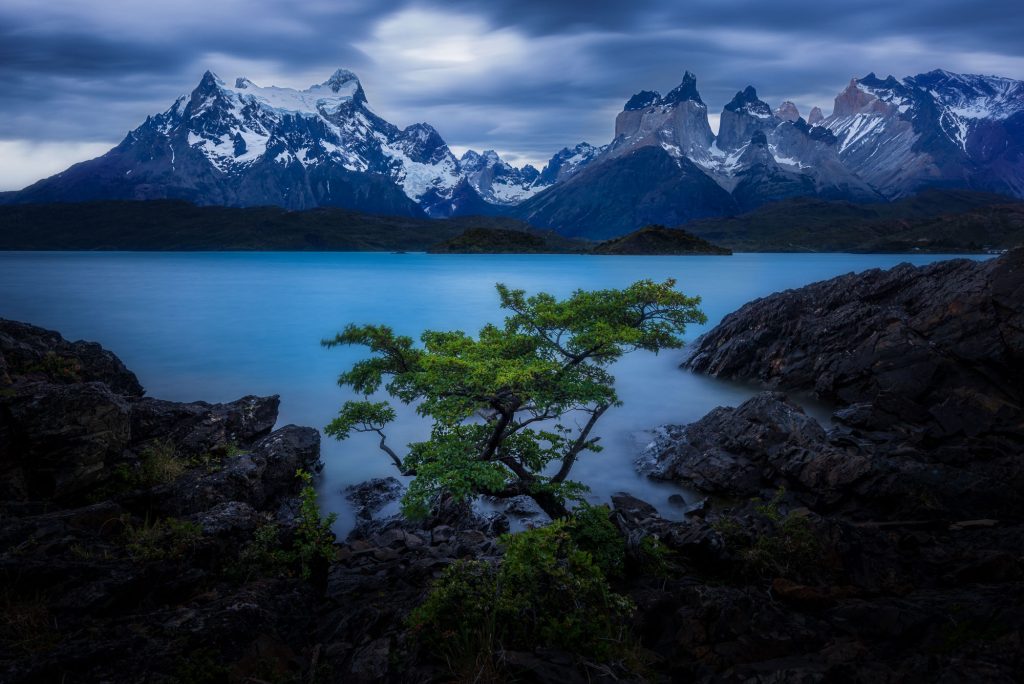
We left El Chalten later that day and made the relatively short (5 hour) drive back into Chile and into the famed Torres del Paine National Park for a brief two-day visit. I had been here before more than 20 years ago and was interested to see how it had changed. The answer, to my surprise, was not that much, at least on the surface. There were more people for sure, and the hiking permits and trails are all far more heavily subscribed. But as an experience it was how I remembered it – absurdly spectacular. Torres del Paine is like a Salvador Dali fever-dream of mountains. What’s better you can camp with minimal fuss on the shores of Lago Pehoe close to some of the classic locations from which to photograph the mountains.
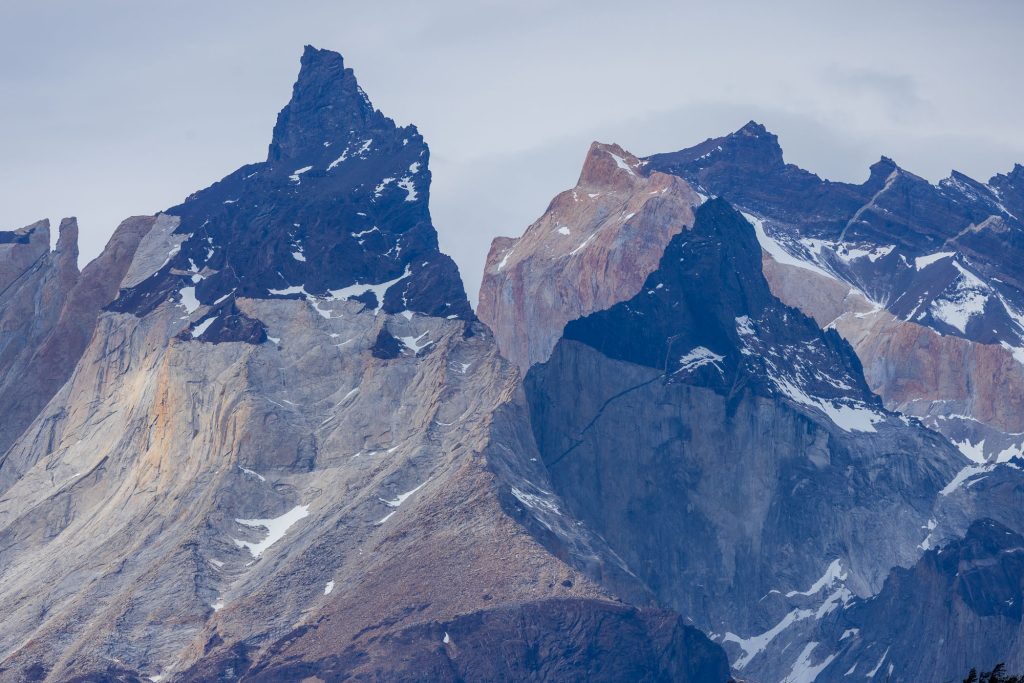
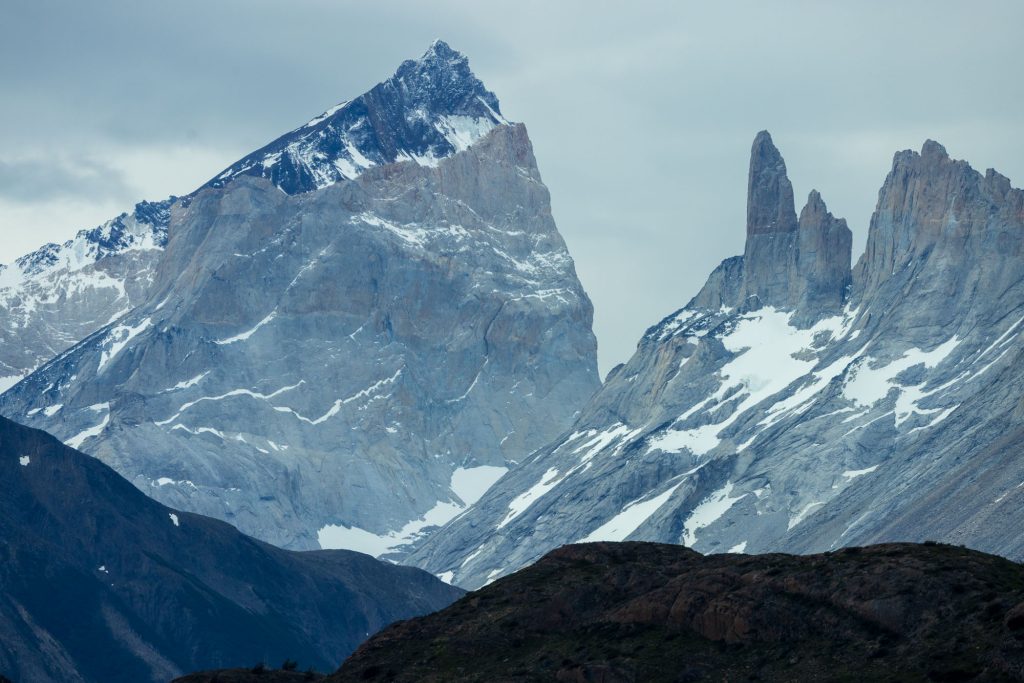
Unfortunately my run of fortune with the light in Patagonia seemed to be over – the sky was now overcast and leaden with little optimism in the forecast for good conditions. However it was still dry and I was able to work. If you don’t have light just double down on form and composition. I spent the first evening making a subject of a little bonsai beech tree growing on the rocky shores of the lake. I noodled away on this one scene for a couple of hours using very precise camera positioning to frame it. I shot some long exposures with my Kase filters for the water and sky and then some fast, unfiltered shots to freeze any movement of the little tree in the breeze. When I got home I was able to painstakingly combine the image in Photoshop using masks. Despite the flat, leaden skies I was also able to have fun making some interesting telephoto portraits of the mountains, highlighting the unique geology and architecture of these stunning peaks.
We’d originally budgeted for four days in the park but had just negotiated a couple of days on a boat to take us into the mythical Patagonian Fjords. So we cut short our time beneath the Torres del Paine and made the two hour drive south to the vibrant town of Puerto Natales set on the shores of Ultima Esperanza Sound. This would be the final part of our four-week journey and the subject of the next post.